A chapter from IRIS
Before We Begin
Sebastian J. Brau · Foreword by Jay Lee, University of Maryland
Almost everyone believes artificial intelligence was born with ChatGPT.
It wasn't.
In industrial AI, we've been doing AI in factories for more than thirty years. Not as a promise, not as a lab experiment: solving real problems, with real money on the table. And it matters that the world knows this, because if people believe that knowledge doesn't exist, they won't go looking for it. And that knowledge holds answers to several of the questions that today have the whole world losing sleep.
To prove it to you, let me tell you a short story. It happened in 1998.
By then I had spent six years working as a software and artificial intelligence engineer at Keraben, one of the big ceramic-tile groups of Castellón, on Spain's Mediterranean coast. We had built systems for nearly every section of the group's factories. And that year the company had poured all its hopes into a new product: the Marmaris. Large-format pieces that mimicked marble — the veining, the sheen, that depth that fools the eye. At Cevisama, the tile industry's great trade fair, the Marmaris was the star. The sales team came home with orders from half the world.
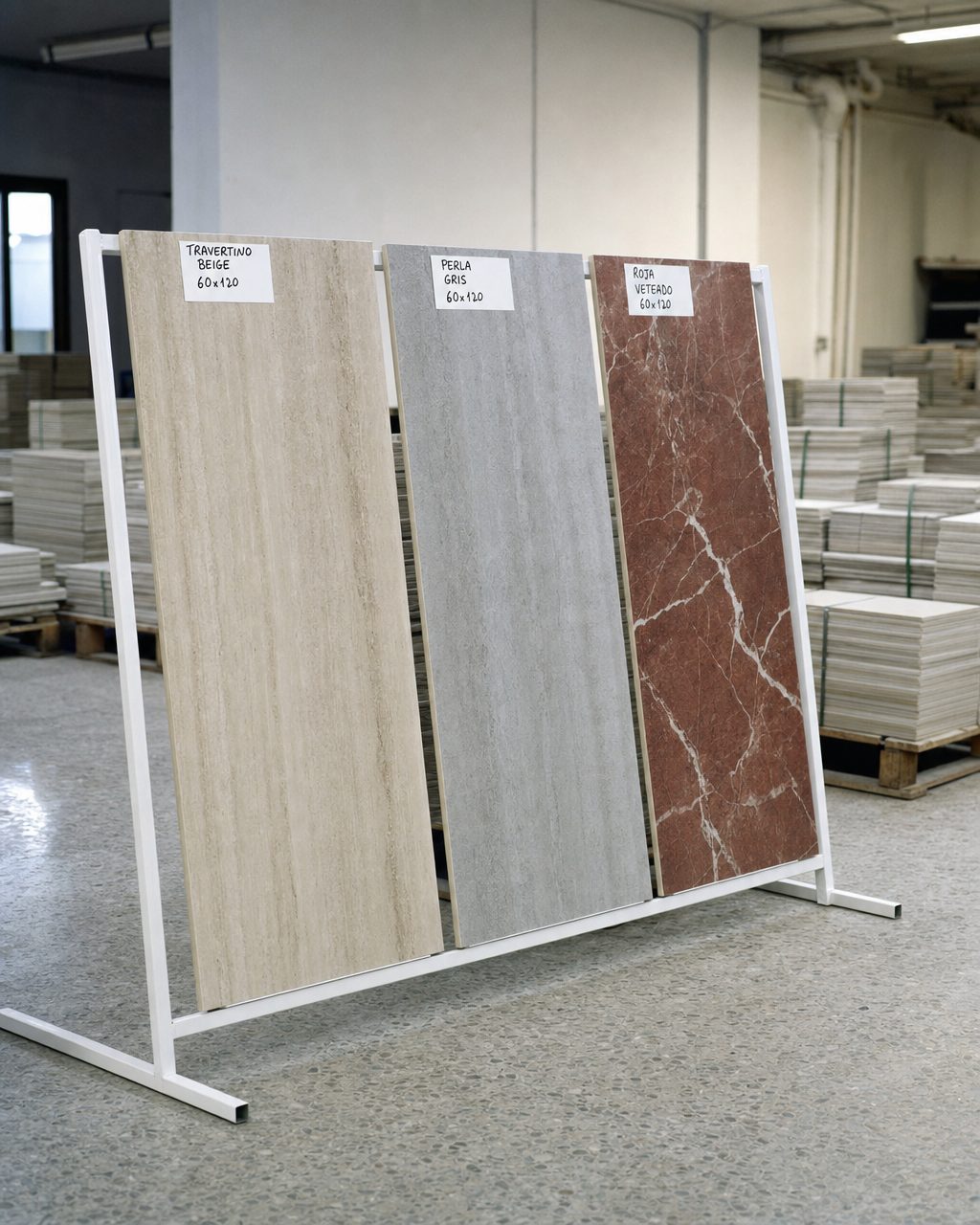
And a few weeks after the fair, the dream turned into a nightmare.
One afternoon, the plant's director of operations walked into my office looking shaken. He came in like a man walking into a court of last resort, and he said: "I figured if anyone can fix this, it has to be Sebas. With one of those magic tricks of his." Magic: that's what my colleagues at Keraben called this artificial intelligence business, because back then it sounded like pure gibberish to everybody. He and I had lunch together every day; there was enough trust between us to talk that way. And there was a problem of the kind that keeps you up at night.
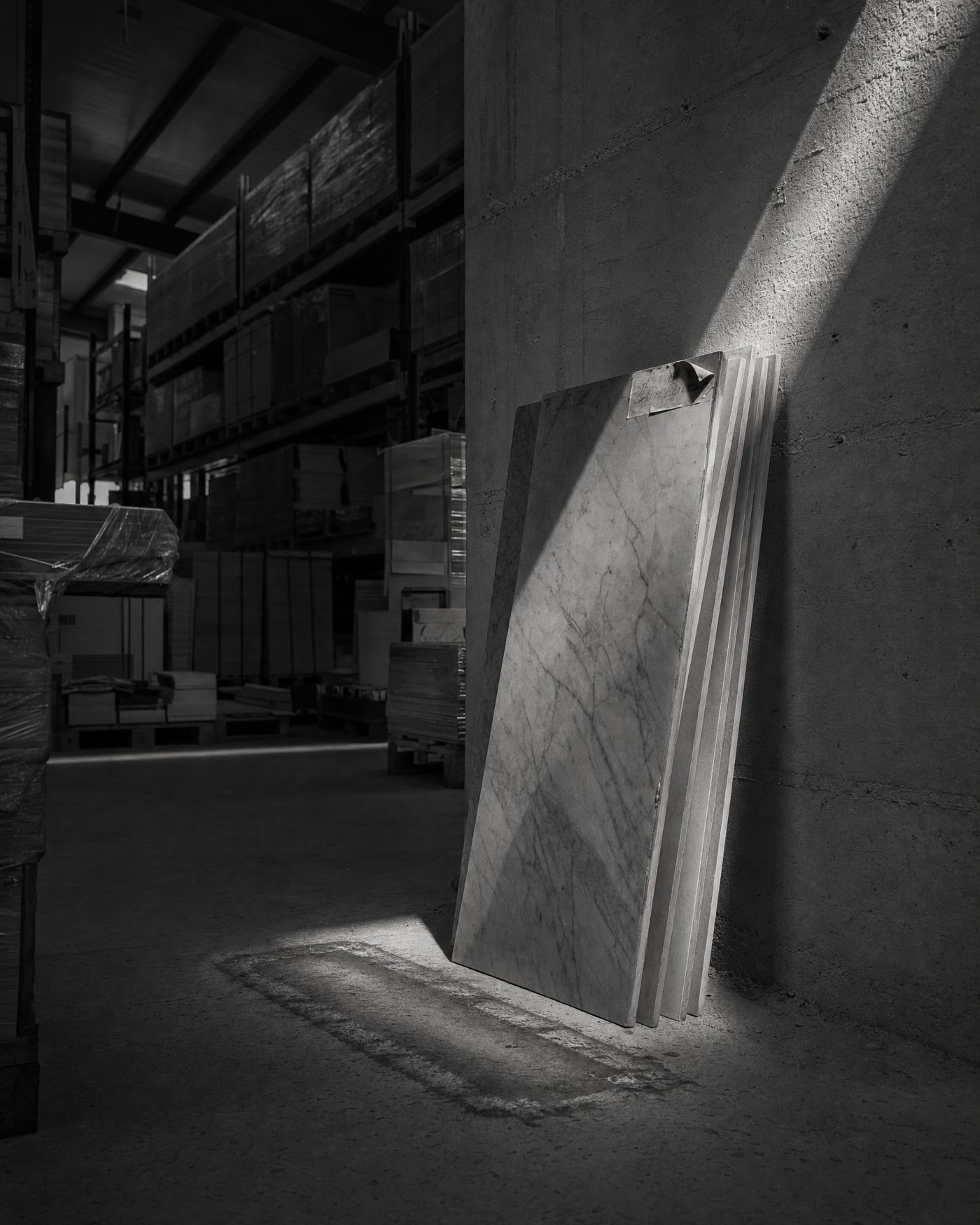
He laid it out for me. The Marmaris pieces, once fired and coated with their crystalline glaze, went through a final polishing and edge-grinding process. On the pilot lines, everything had gone fine. But when the product moved to the mass production lines, the monster appeared. Tiny curvatures — the kind that on a normal tile are completely invisible to the human eye — were lethal on these pieces: the polisher, which works at a fixed height, ground bald spots into them. In the center of the piece, if it had come out concave. At the corners, if it had done what we called on the factory floor a "mustache." And a piece with a bald spot was a tiesto: scrap. Garbage. Four-foot pieces, with all the production cost already sunk into them, straight into the dumpster. At unbearable rates. On exactly the product our order book was full of.
That same evening, when I got home, I picked up the phone and called the man who had been my artificial intelligence professor at Jaume I University: Ángel Pascual del Pobil, chaired professor of AI. I explained the problem and asked him to meet so we could think through, together, how to attack it.
With his support, we had the system running within weeks. We bought a Keyence laser that produced a perfect topographic image of every piece as it left the kiln — one of those big Sacmi kilns: an exact relief map of its flatness. And we built an artificial intelligence that learned. From whom? From the kiln operators. Because those technicians already knew how to straighten pieces by working the firing curve: nudging the temperature of certain thermocouples up or down, they could correct the curvature. The AI watched them work, learned the relationship between the firing curve and the movement of each piece, and within a few weeks it was doing something that still widens people's eyes when I tell it today: it detected, thirty minutes in advance, when the trend the production was riding was going to end in a mustache or a concave bow that would come out of the polisher as a bald spot. And it acted directly on the thermocouples to rebalance the curvature before the defect ever came to exist.
The problem disappeared. That project, developed with del Pobil's help and a great group of Keraben professionals, saved the company millions of euros. And it saved something you can't put a number on: the standing of a brand that had promised the star of the fair to half the world — and got to deliver it.
All of that happened in 1998. We programmed in LISP, the language created by John McCarthy — the same man who, decades earlier, had coined the very term "artificial intelligence." And that AI was what today we would call a narrow AI, specific, vertical: it couldn't write you a poem, but about how Marmaris pieces curved inside a kiln, you didn't have to explain a thing. It intuited it perfectly. It knew how they were going to move, and when.
And now let me guess a thought of yours. If you've been paying attention, there's a question that must have crossed your mind: what happened to those kiln operators? If the AI learned from them how to work the thermocouples, and then acted on the thermocouples directly... what became of the technicians it learned from?
That question — exactly that question — is the one the entire planet is asking itself today.
And that is why I told you this story. Because we have been through this before. In the same arenas where AI was applied — and robotics before it — every problem the world is now beginning to sense, we already had. And they got solved. Some well, some badly. And there exists a memory, accumulated over decades on the factory floor, of which approaches produced good outcomes and which left wreckage behind. We are not wandering blind through the desert: there is a map. It's just that almost nobody knows it exists — and nobody goes looking for knowledge they don't know exists.
This book compiles the experience of one man, but behind it stands an entire industry that could tell you the same story. And I'll make you a promise. These days one sentence gets repeated everywhere: that artificial intelligence is going to take everyone's jobs. By the time you finish this book, you'll know what that sentence hides: that there isn't one artificial intelligence — there are two. One that does destroy jobs and brings back every problem the world is starting to fear. And another that does the opposite: it amplifies people, makes them more capable, and builds something that lasts. You will know how to tell them apart. And you will know which of the two you want in your factory and in your country.
So let me begin with the day all of this drove itself into me for good, and I decided to write this book. It wasn't in 1998. It was much later — at forty thousand feet.
That day at forty thousand feet is chapter 1
What you have just read is the opening. From there, IRIS walks through what factories already do well, the architecture that lets you add artificial intelligence without risking what works, and six real deployments told from beginning to end.
210 pages · read it in your browser, phone or tablet, and it remembers where you left off · EPUB included